Achille Parrilla on Bracco 175cc
1955 INDUSTRIES DEFEND THEMSELVS
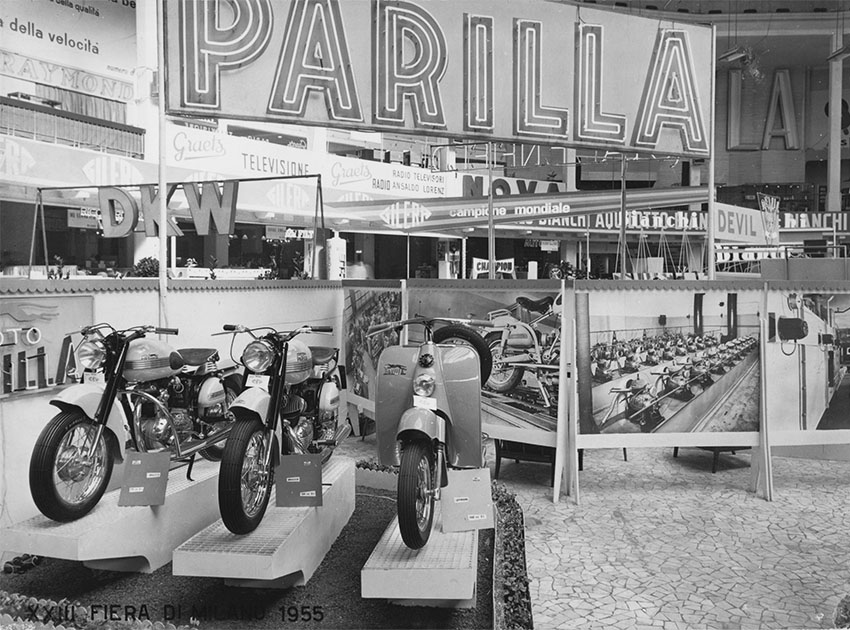
In 1955, many companies which survived the war or were born after the war, were still expanding. Unfortunately they were appearing the first signs of a possible industrial decline. Nobody could say that the market could be saturated.
Some companies anyway noticed those signs and reached lowering prices of some models. Many companies placed on the market a small desplacement's motorcycles (100cc. 4-stroke). Masterpieces to offer fuel economic light motorcycles. This market's policy seemed to attract a lot of motorcycles' customers. Unfortunately in 1955 the car "FIAT 600" appeared, even if it was difficult to buy due to the price and the necessary driver's license. Nevertheless most people thought of that car: a whole family could travel all together, speaking, joking and wondering of the landscapes without the risk of rain and cold weather. The "car" had made inroads in the Italian mind…
THE PARILLINO 49cc TWO STROKE
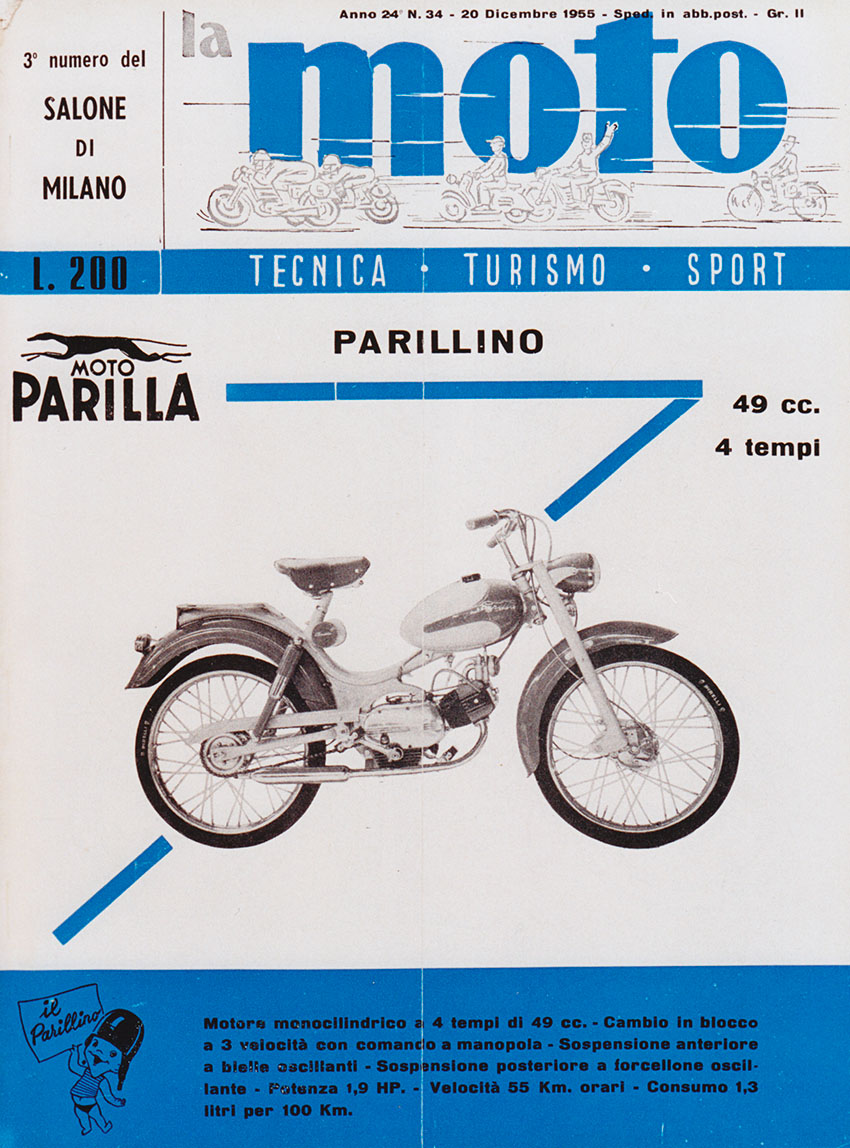
The Parilla Company runned for cover and put on the market the "PARILLINO" 49cc. 2-stroke.
THE 175cc FOUR STROKE SPECIAL TOURING
A motorcycle based on cheapness, with pressed steel front forks and oscillating links on loaded wheel, a more simple frame without side cases, and only a small round container. The brakes became smaller. This model took the "SPECIAL TOURING" name, but it was much different in appearance compared with the previous one.
THE 175cc 4-STROKE TWINSHAFT
Trying to exorcize the moment's fear, it was born the beautiful motorbike 175cc. 4-STROKE "TWINSHAFT". A single cylinder designed by the engineer Salmaggi.
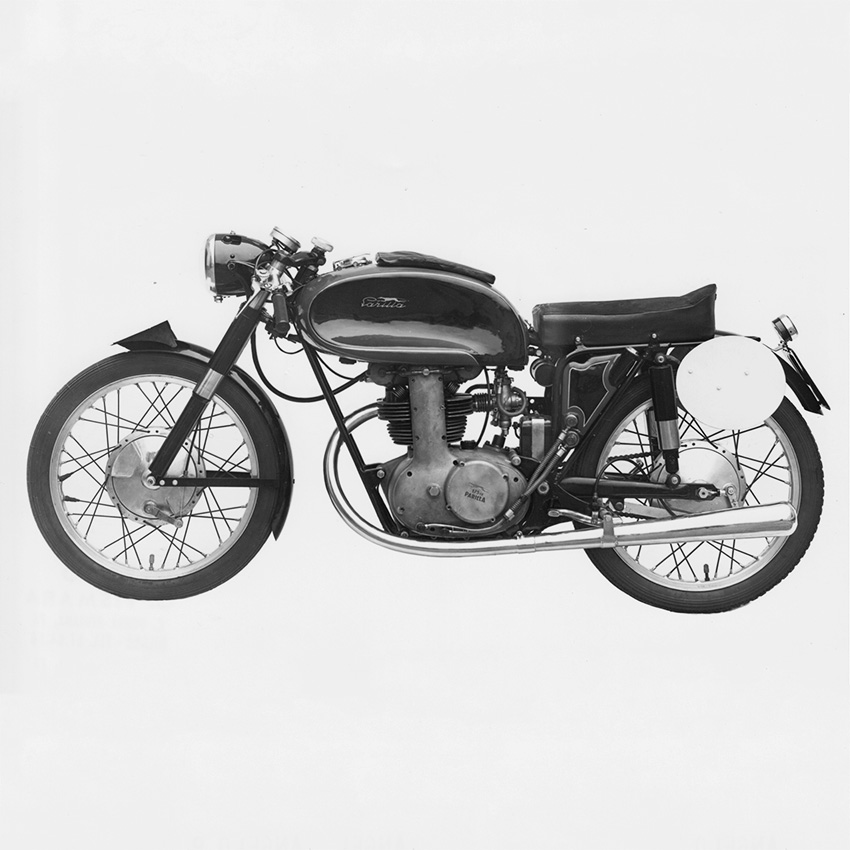
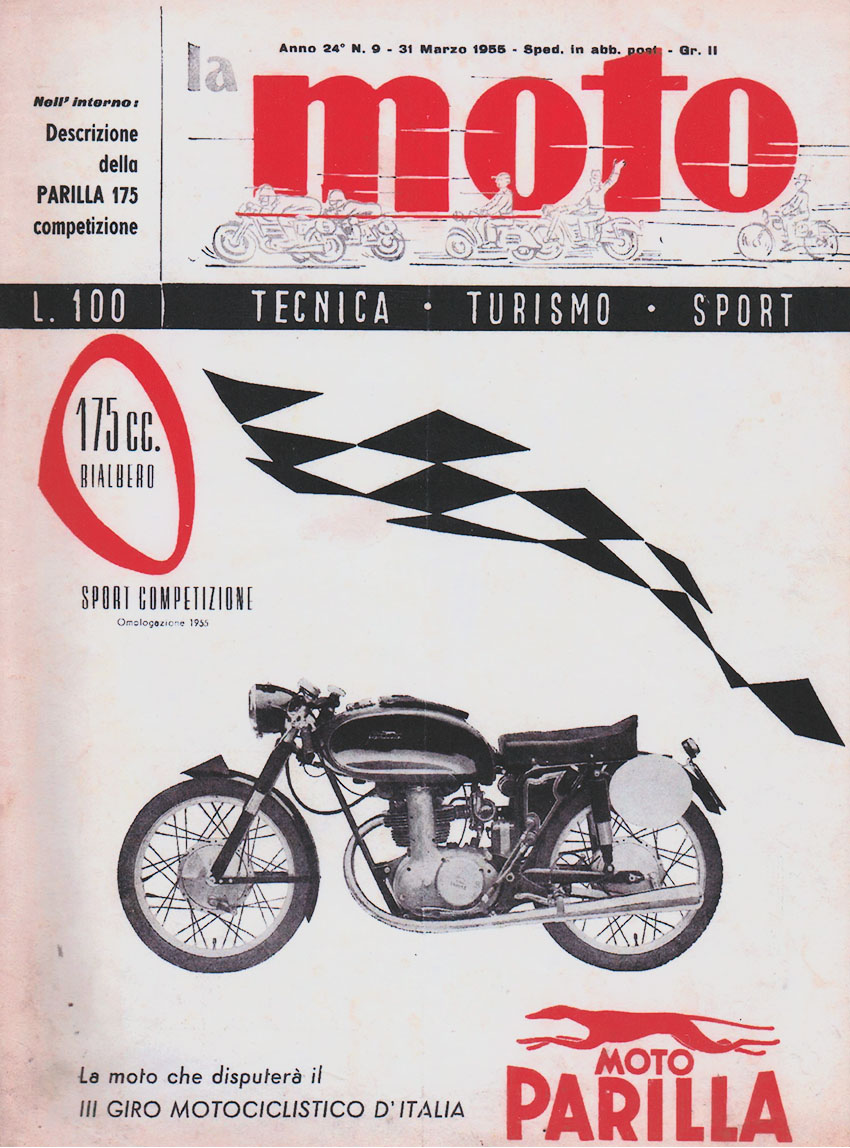
175cc Sport Competition Twinshaft, 1955
The motorbike was looking very aggressive. The nice petrol tank with wide side cuts was well aligning with the oil tank and with the short suede saddle. The nice engine was showing a remarkable head, with a well proportioned "valve's castle". The company fixed the price of the motorbike at Lit.600.000.
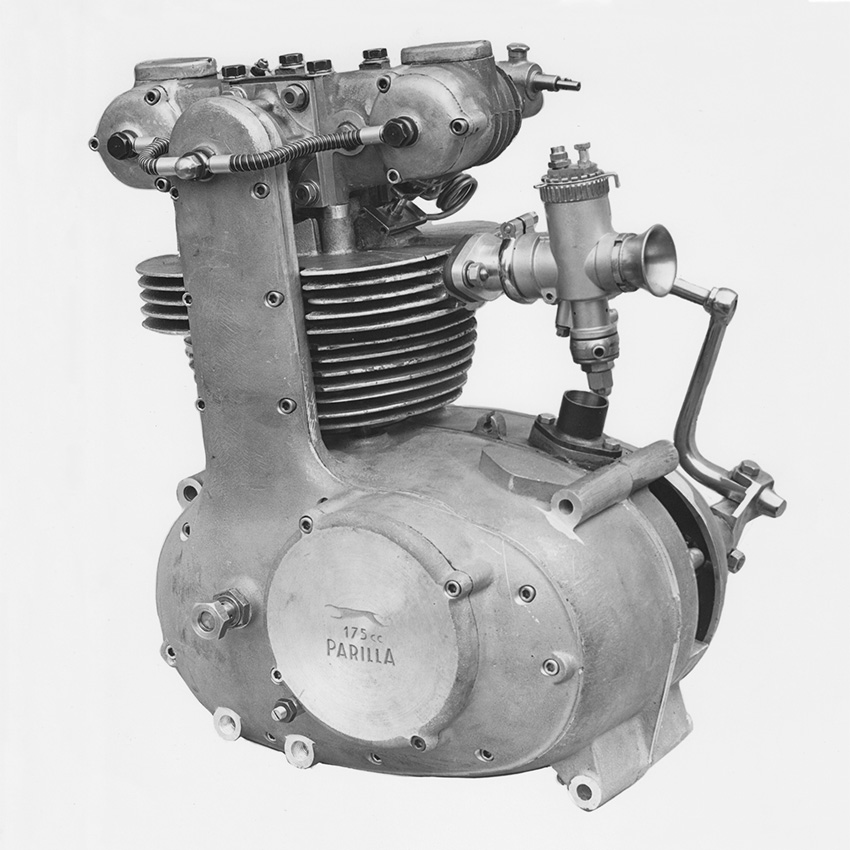
175cc Twinshaft (clutch side), 1955
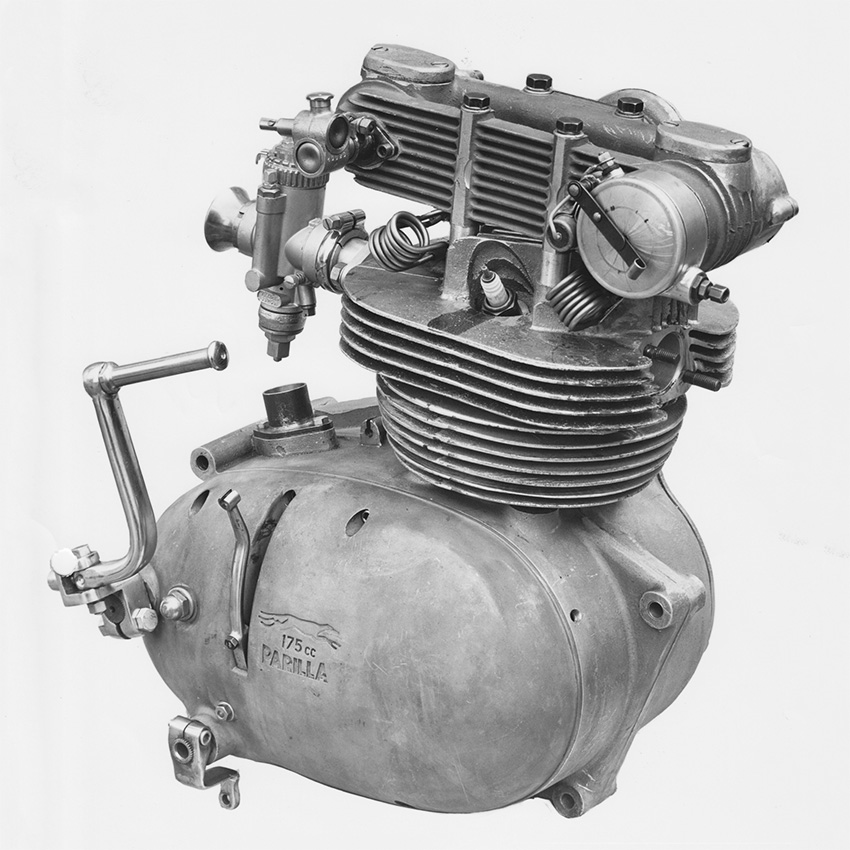
175cc Twinshaft (ignition side), 1955
HUSQVARNA
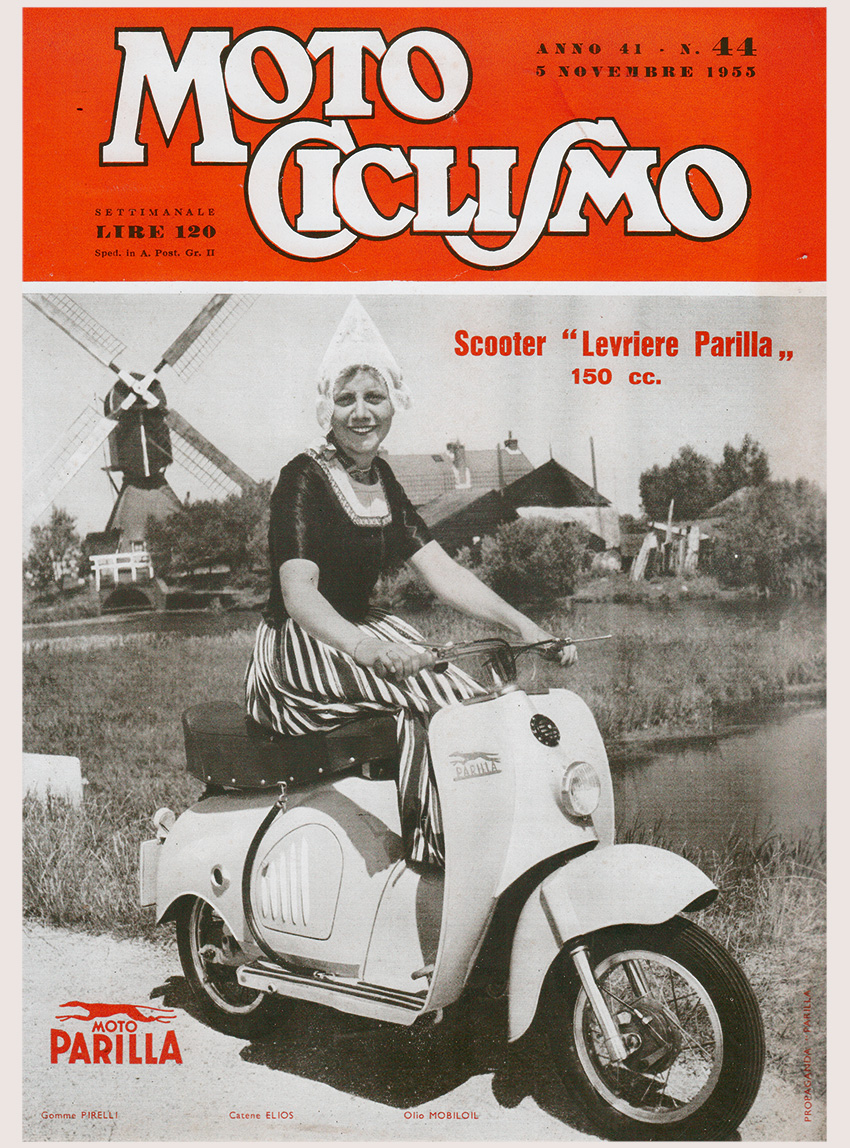
Following a new market strategy, the Company provided under license the "Levriere" Scooter to the HUSQVARNA COMPANY. The engine was a Husqvarna production.
TRAFFIC WORDENS
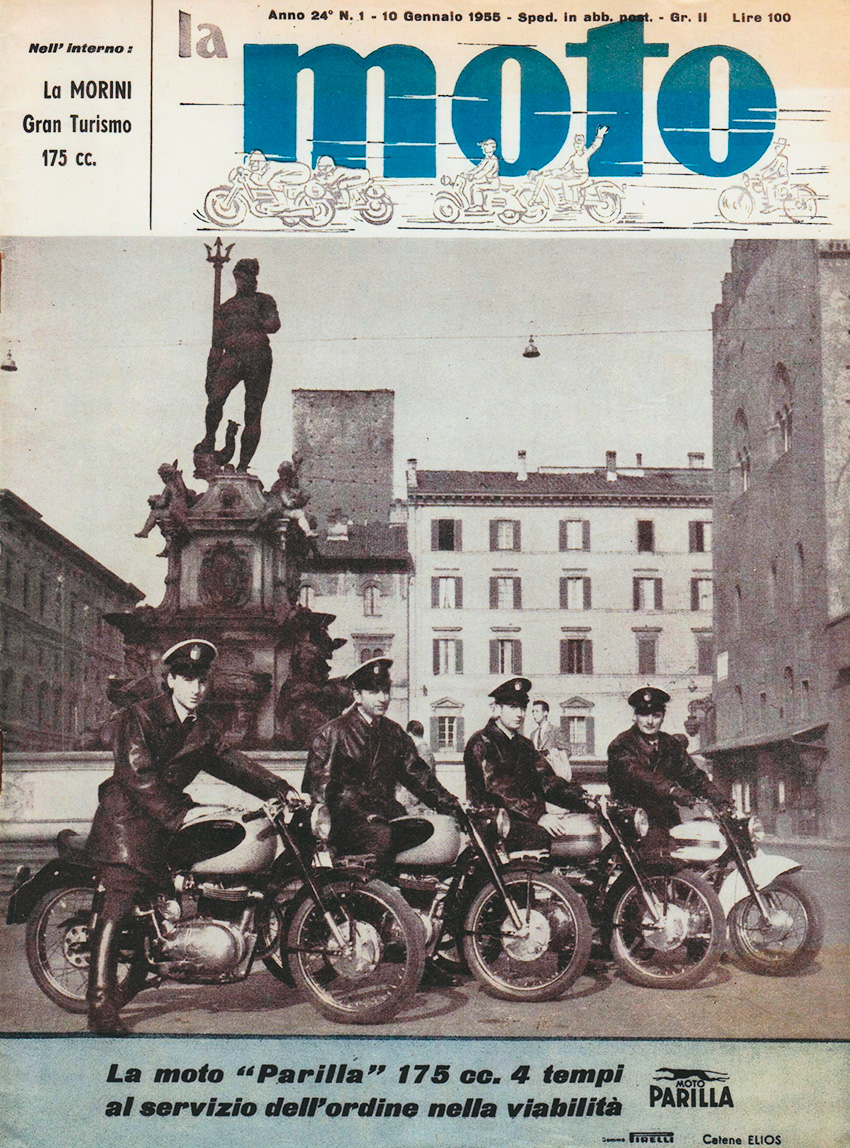
The sales' department reached two interesting agreements: with the Town of FLORENCE to supply n.143 motorcycles, and with the Town of GENOA to supply n.50 motorcycles to the TRAFFIC WARDENS.
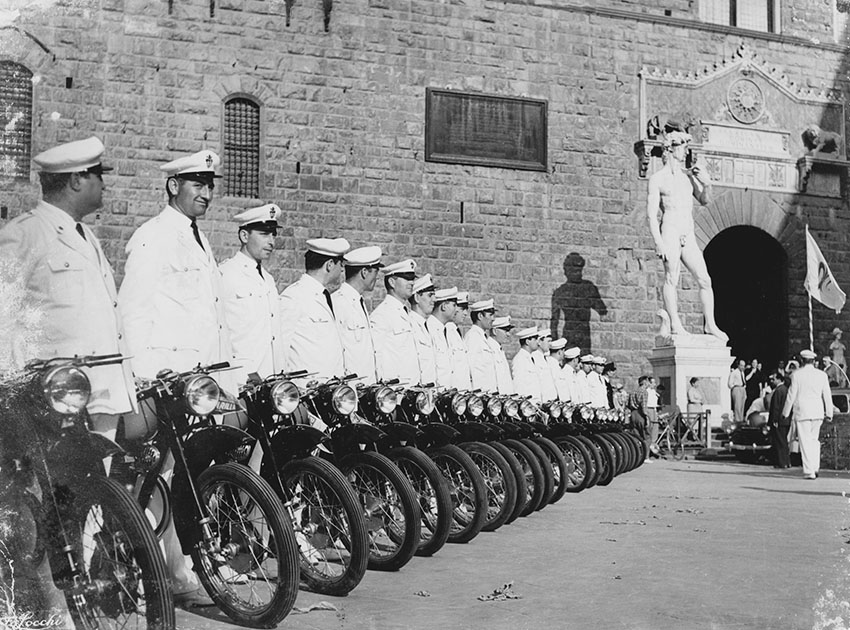
Florence, 1955
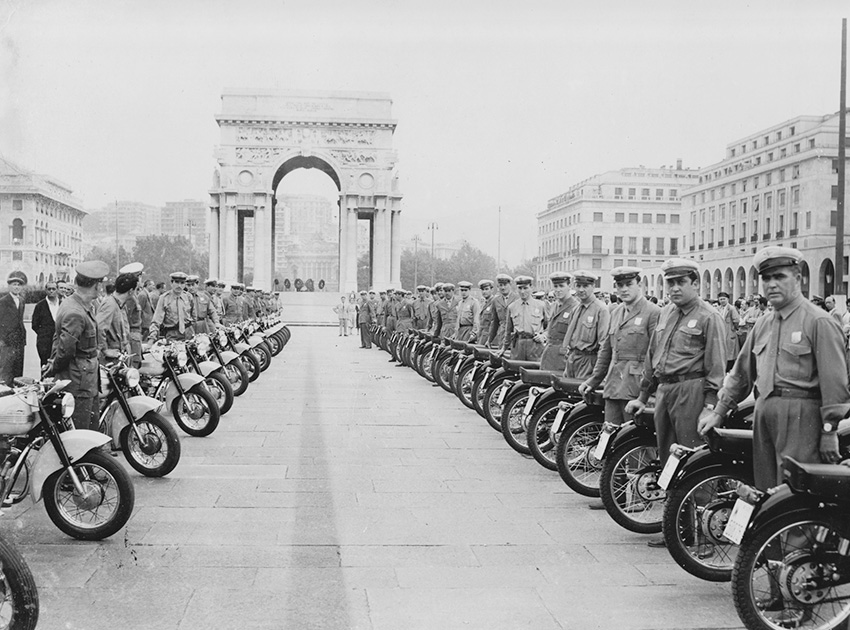
Genoa, 1955
THE SPORT
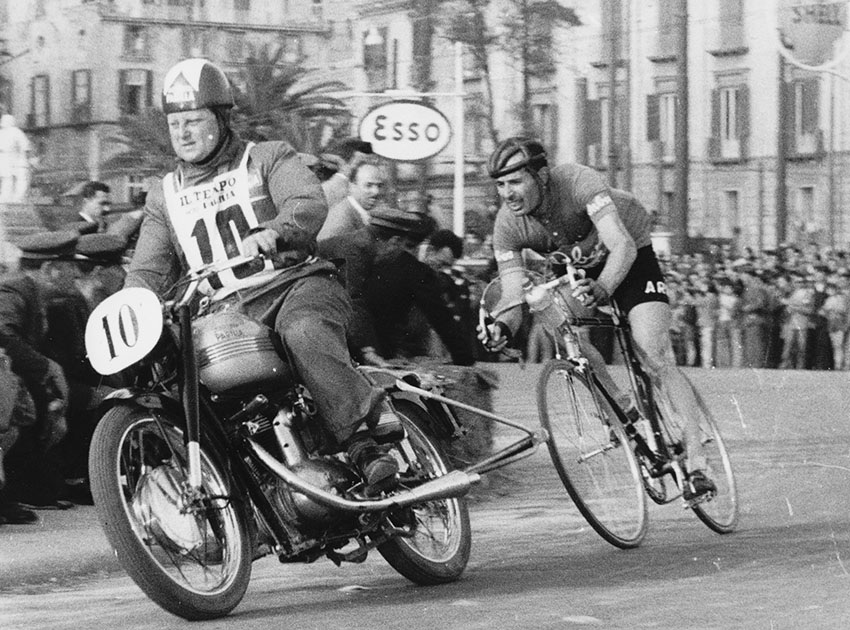
The new 175cc.four stroke "Twinshaft" showed immediately very good performances, winning the longest stage at "MILANO-TARANTO", the fifth one of Km.483 with the rider ROBERTO CALDARI. In Holland the Parilla Motocross riders won many races, and the rider FRITZ SELLING won the National Champs. Racing in the "Reliability" trials Parilla motorcycles won n.15 races. One of the riders was the faithful GIANFRANCO MUSCIO.
SHORT NEWS
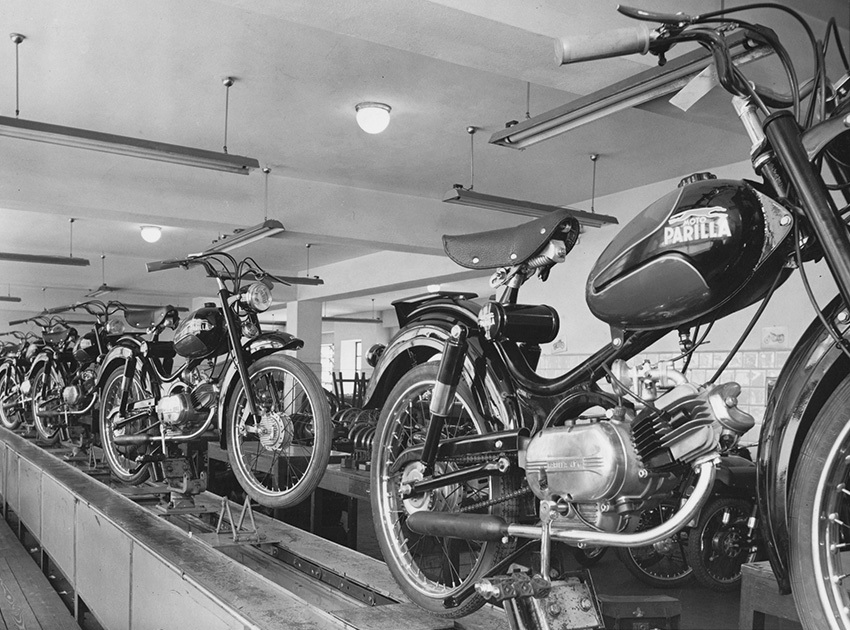
The Company was manufacturing one "Parillino" 49cc. 2-stroke each 8 minutes, besides the n.8.000 motorcycles with license plate
1956 TEN YEARS
The company celebrated his tenth birthday. Ten years only from the first "Singleshaft" made with passion and bet.
The Parilla Company was appearing among the top companies both for technologies and for number of models, productivity and notoriety.
In 1956 the company focused on the implementation of production's processes, on the improvement of the models already on the market,
on the modernisation of some dated models, and especially on the manufacturing of light motorcycles and nice-looking mopeds, with low
price and very cheap running costs.
Due to this policy it was suspended the assembling of some motorcycles which gave, time before, great satisfactions, as
the 150cc.two stroke; a very performing engine, but with an overconsumption. It stayed on the list only to end stocks.
Only the "Greyhound" Scooter (Levriere) remained in production till 1958.
FAUNO 98cc FOUR STROKE
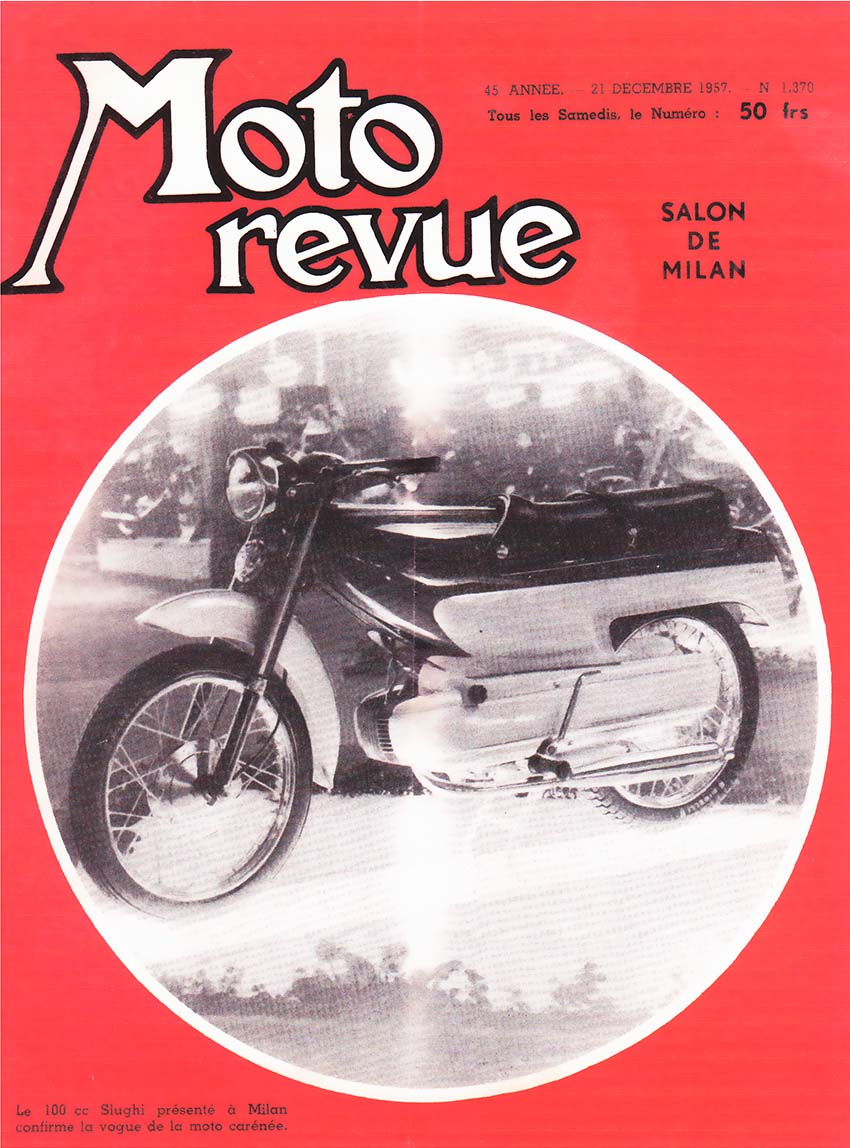
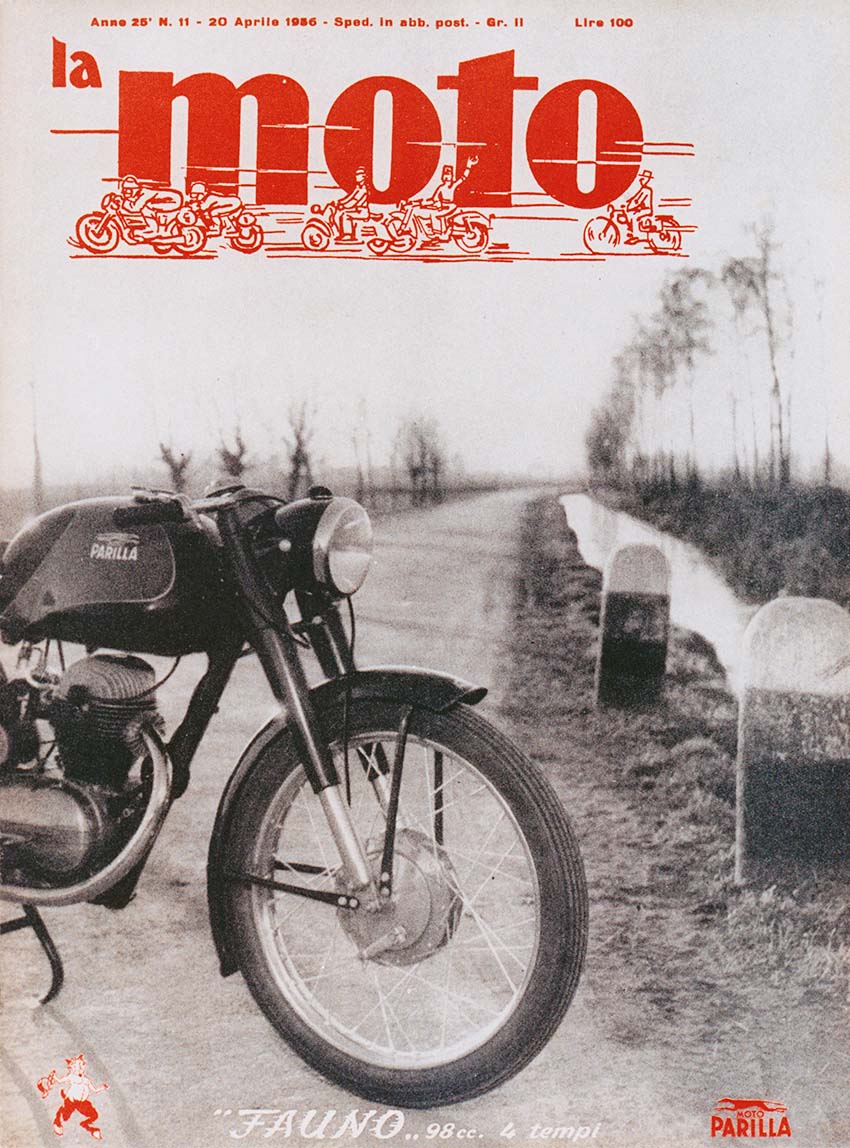
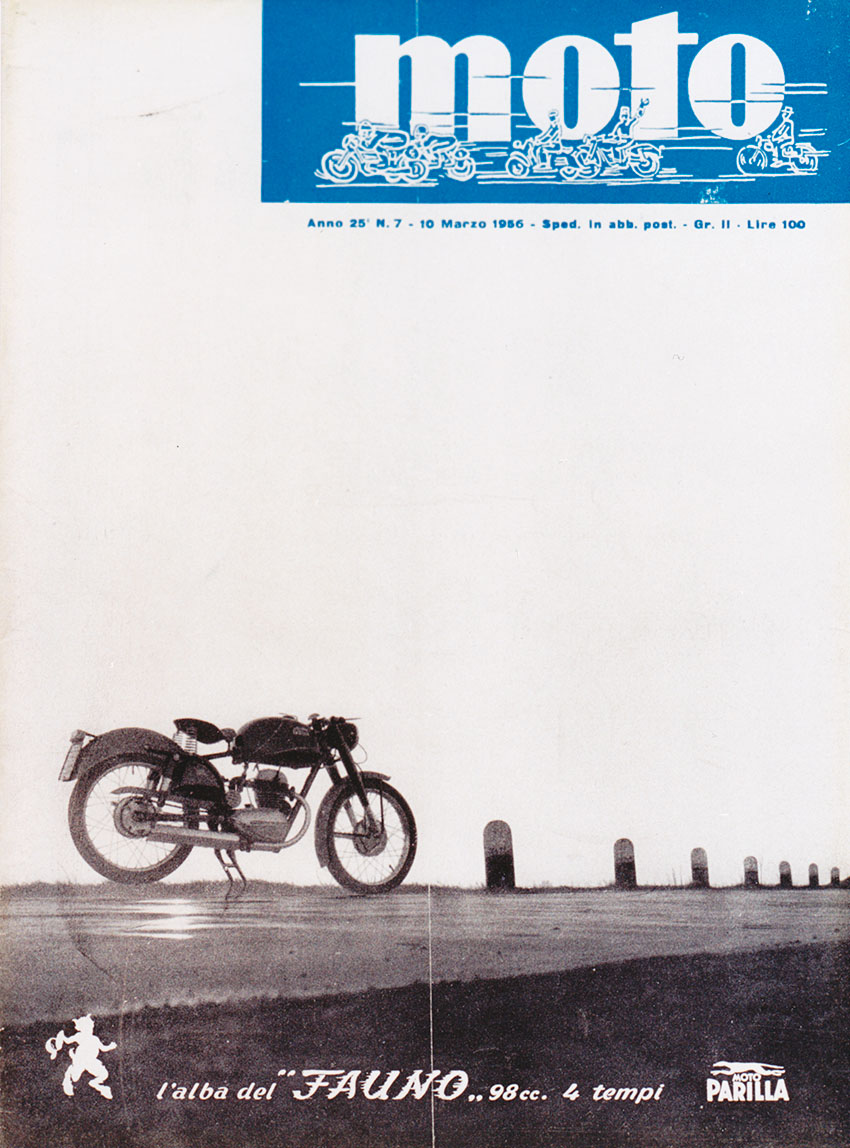
The FAUNO 98cc. 4-stroke was a light motorcycle with a brain new, simple and clean design, very different on the tank's paint due to a large black stains, similar to a Panda bear. The cylinder was vertical, but even if some press was declaring this engine to be a single shaft, on the contrary it was a "rod and rockers" engine, lubricated by oil vapors coming from the crankcase. This model did not have the expected success, but anyway it was the base for the next very successful 125cc. 4-stroke.
CHANGES
Besides the birth of the new 49cc. 4-stroke, assembled side by side with the 49cc. 2-stroke, it was modified the 175cc. 4-stroke, which now was sparking with automatic advance pins on the right side of the engine, fixed on the dynamo stator, a new chain tensioner for the distribution to get a quieter engine, better engine's performances and an easy use, especially at the start. It rolled off the production of the 175cc. 4-stroke "Special Touring". The "Bulldog" three-wheeler changed from 150cc. 2-stroke to 175cc. 4-stroke and kept the "Atlantis" name. Due to the difficulties to meet all the purchase requests (both Italian and foreign market) for the "Parillino", a part of the production was displaced to the "Wilier Triestina" factory.
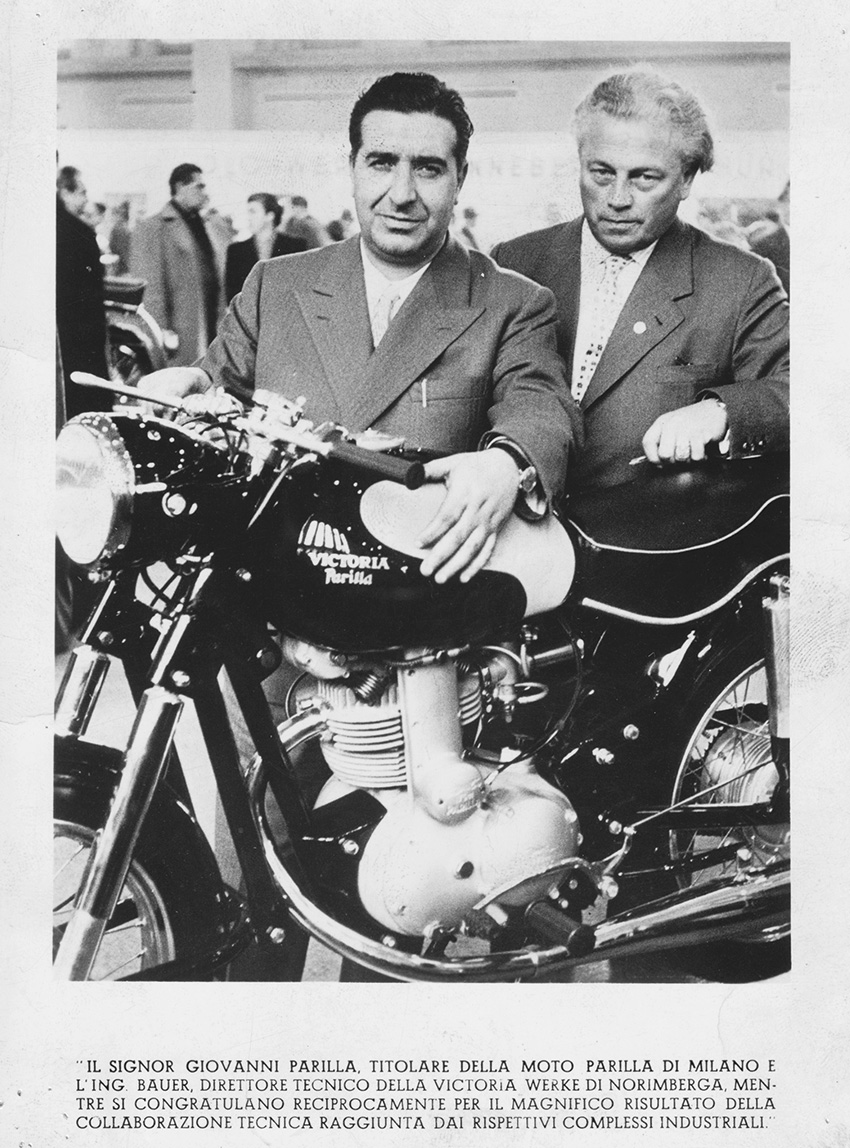
Giovanni and Eng.Bauer
COOPERATIONS
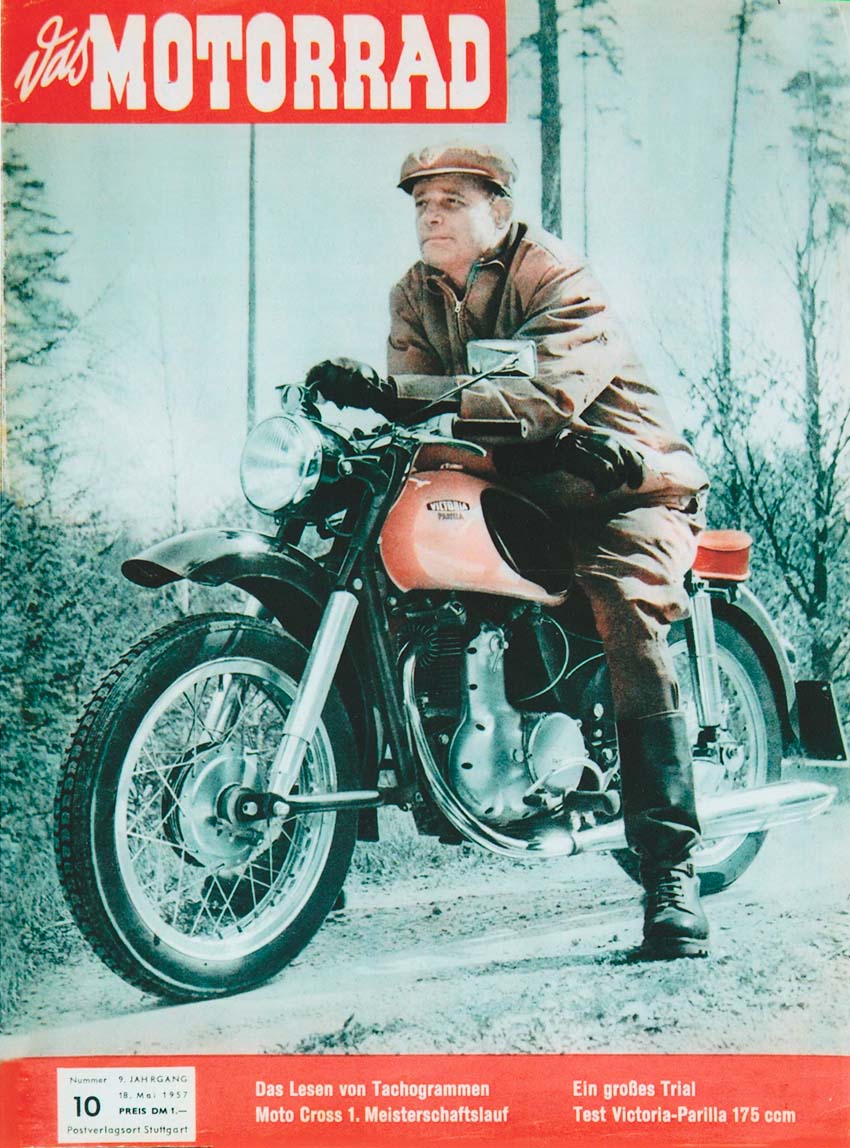
The commercial department made a special agreement with one of the most important German Company: the well known VICTORIA WERKE, which was manufacturing motorcycles up from 1901. The agreement was regarding the supply of engines 175cc. 4-stroke. The motorcycle sold by Victoria Werke was named "VICTORIA PARILLA", and it was distinguished by a German burly appearance.
The Milan's Company TAURUS, manufacturer of wonderful single and Twinshaft high powered motorbikes since the year 1930, choosed to buy the Parilla engine 49cc. 2-stroke, to fit out his mopets. The "Levriere" 150cc. 2-stroke scooter was built under license in Belgium, and took the name of "NOVY PARILLA 150".
THE SPORT
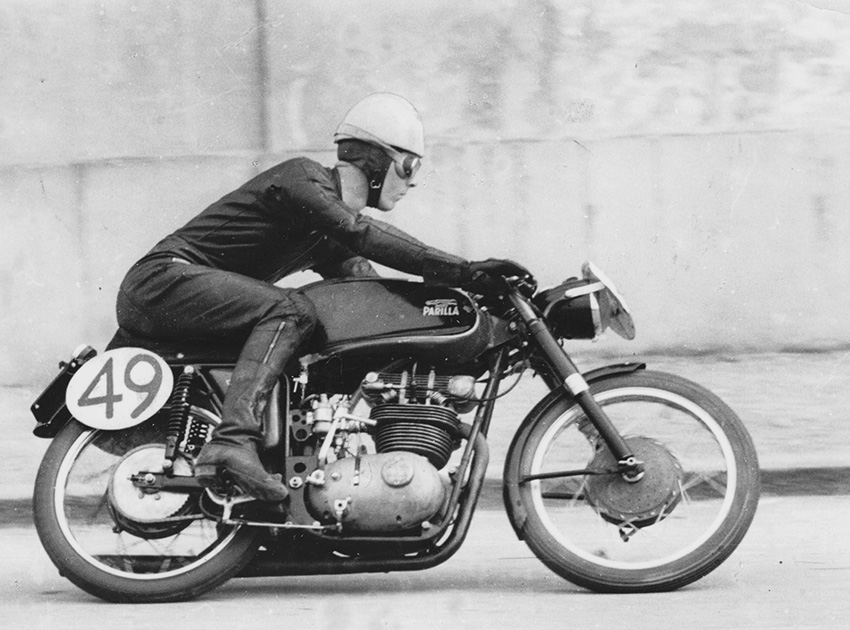
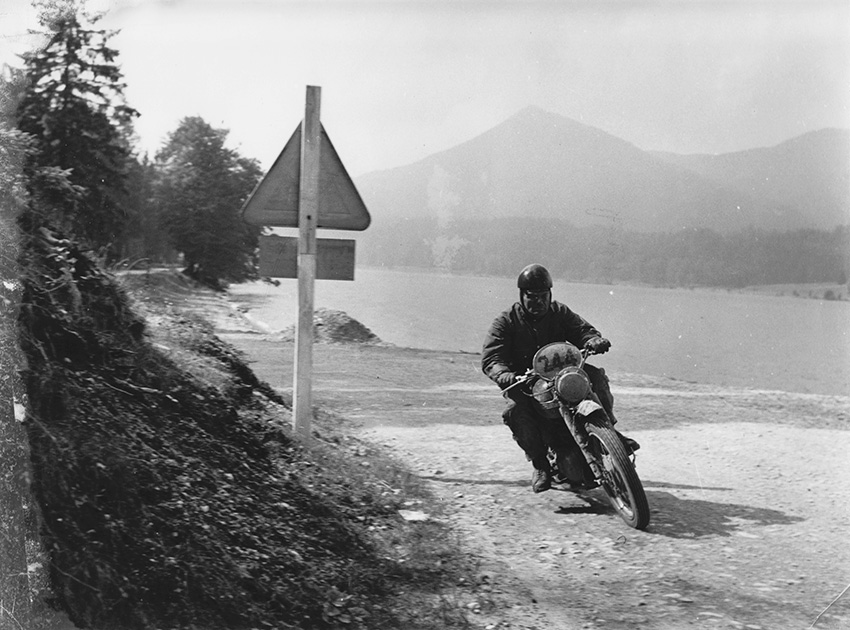
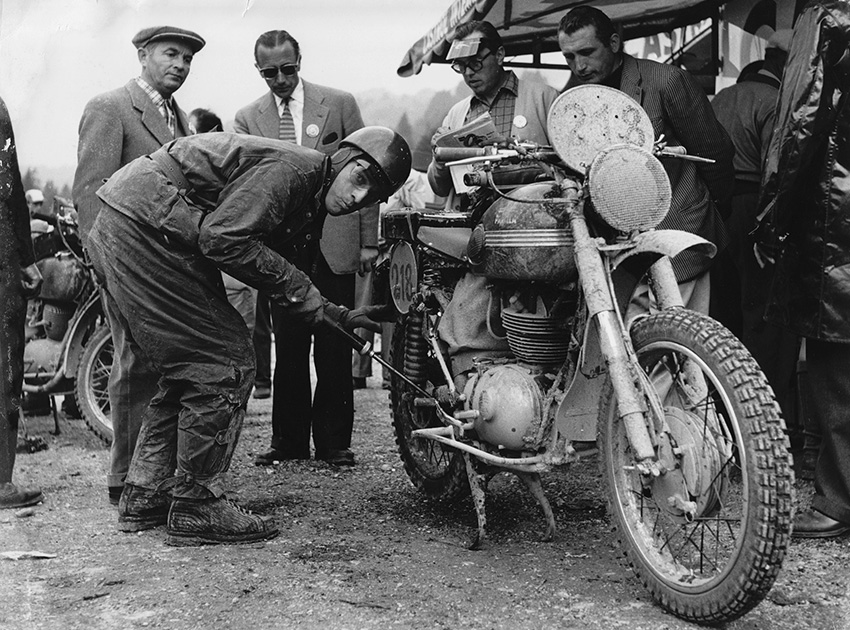
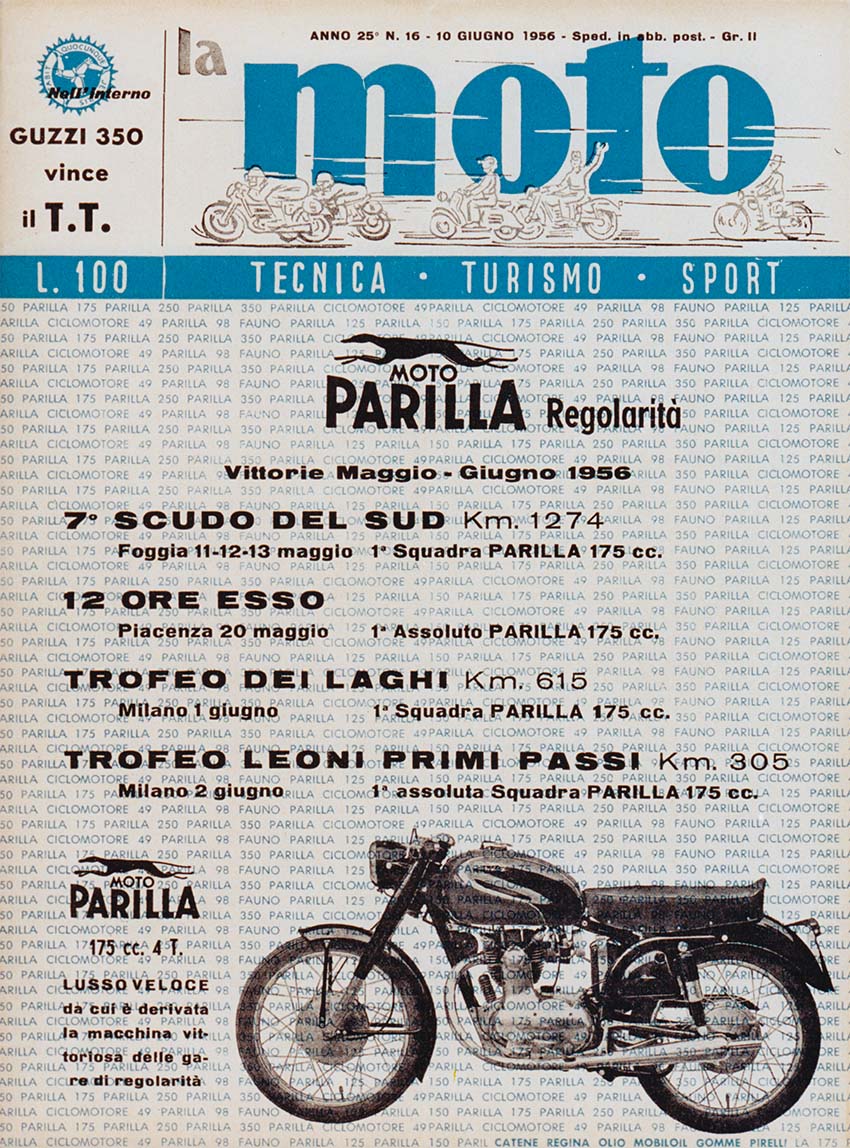
The 1956 sport activity was characterized by the presence of the "Twinshaft" 175cc. 4-stroke on the different engine's displacement classes. This engine was taken care of by the engineer Salmaggi, who increased power and reliability. Entered the scene the 175cc. 4-stroke "Regolarità" (Regularity), strictly derived from the 175cc. road model, with good performances. The motorbike was recognizable especially by the wide petrol tank of the 175cc. 4-stroke "Touring 54", with raised fenders, hydraulic front forks and with welded tubes under the frame to protect the engine.
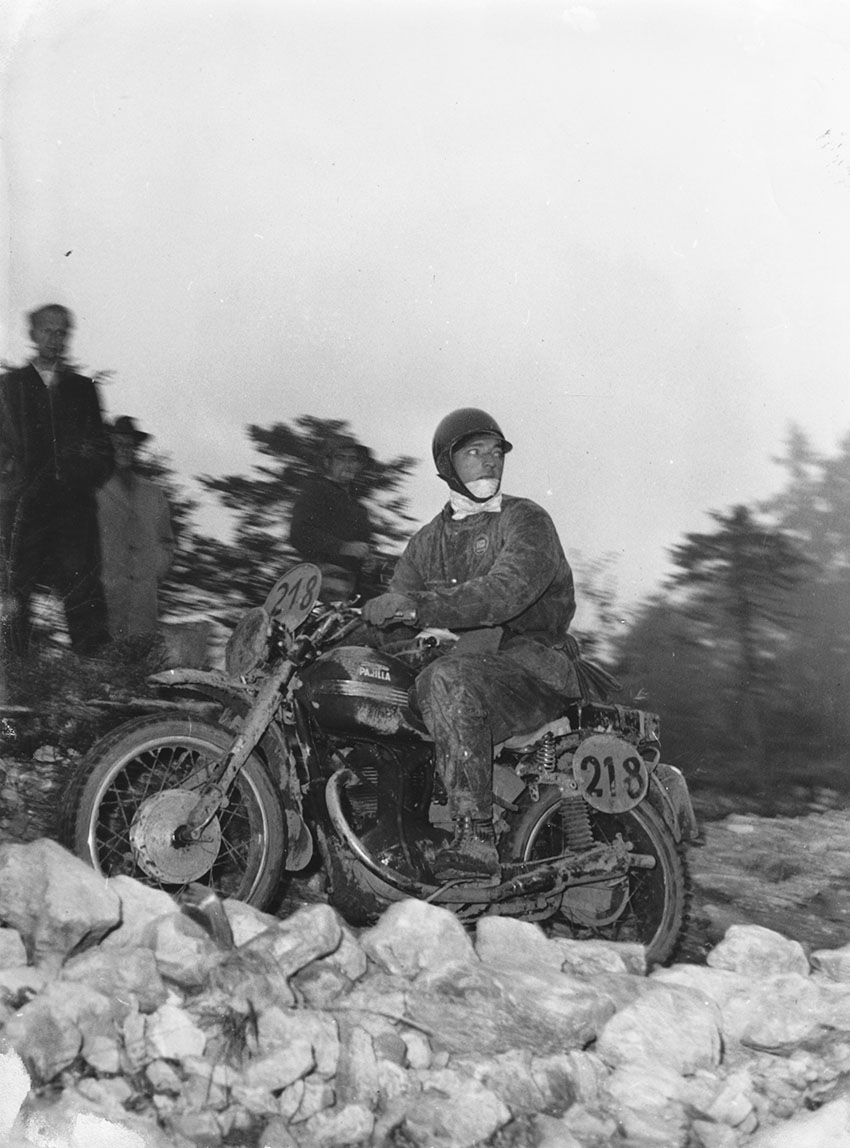
Vanoncini, Garmisch, 1956
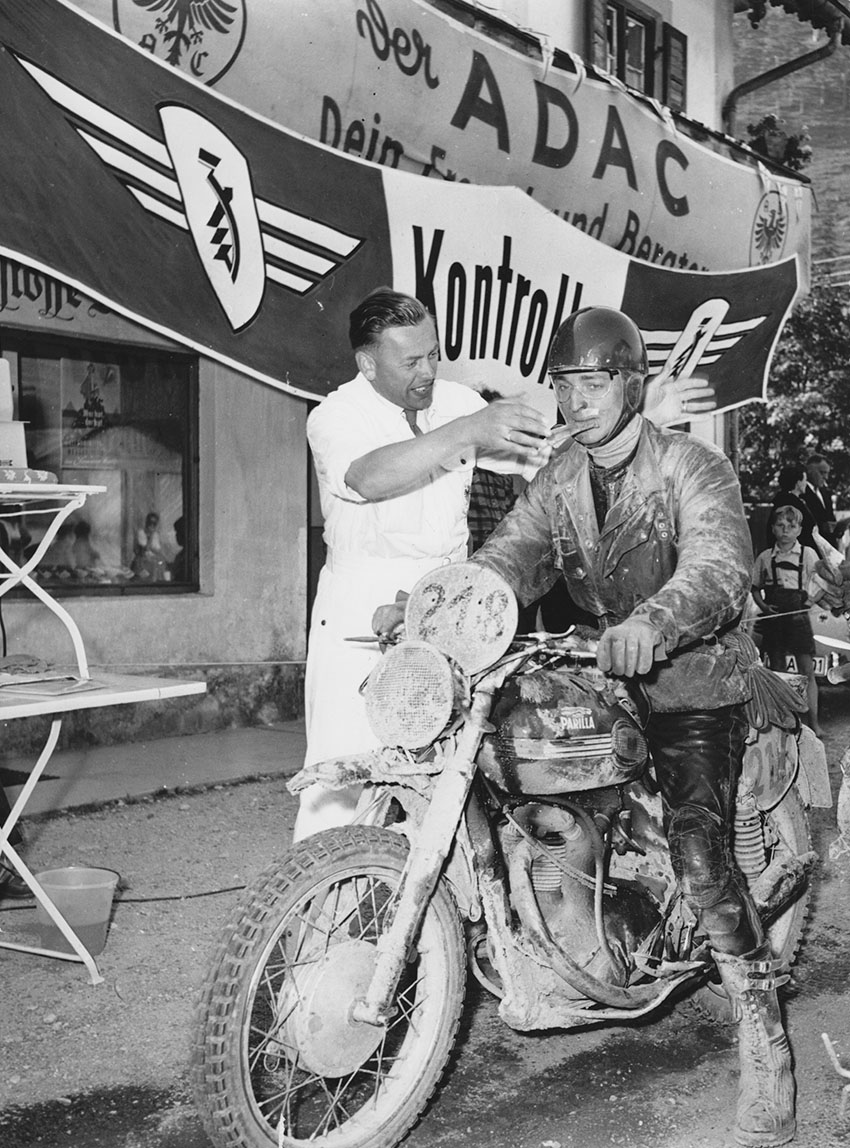
Vanoncini, Garmisch, 1956
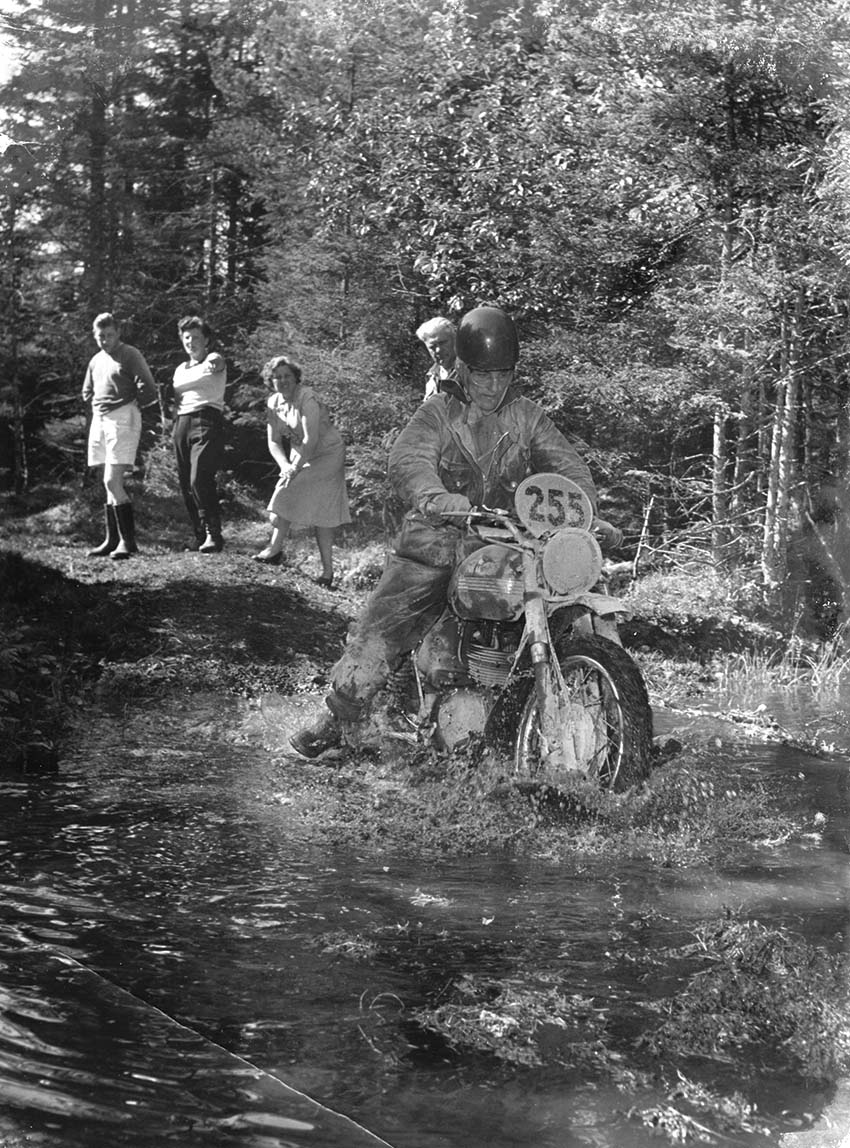
Rottigni, Garmisch, 1956
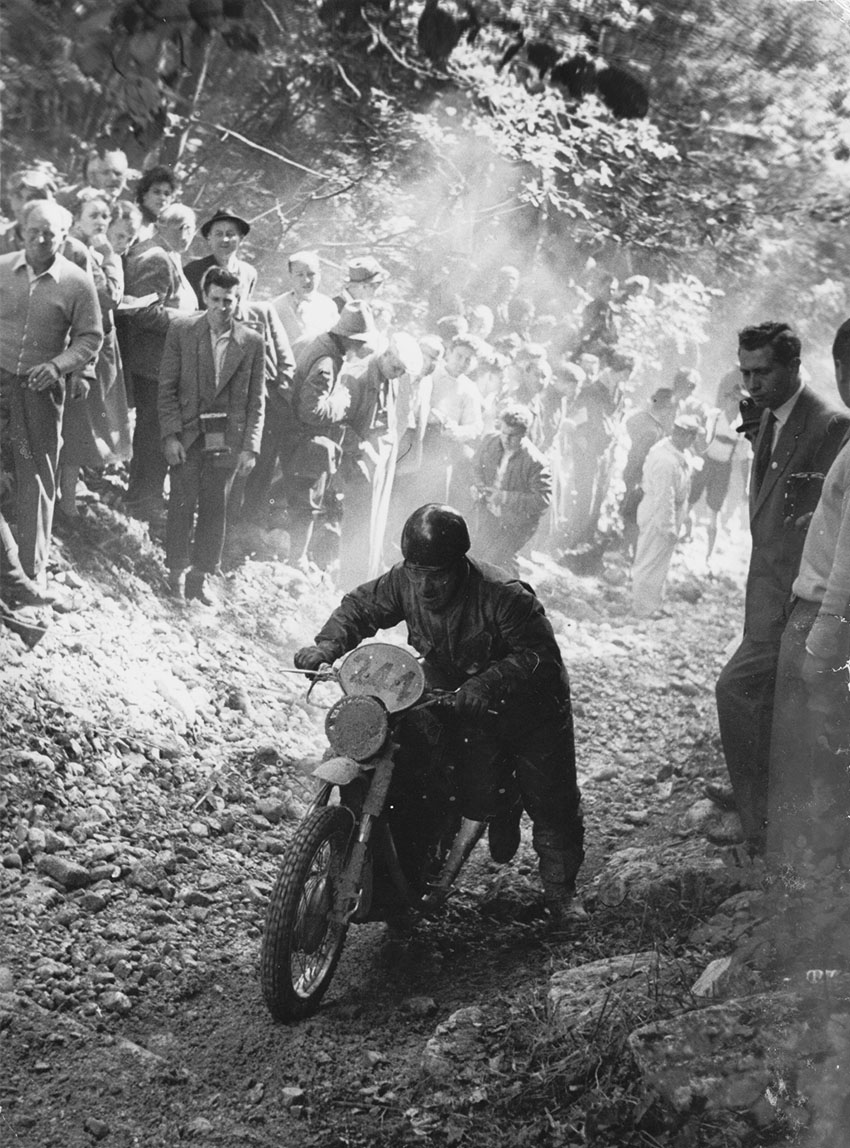
Bellezza, Garmisch, 1956
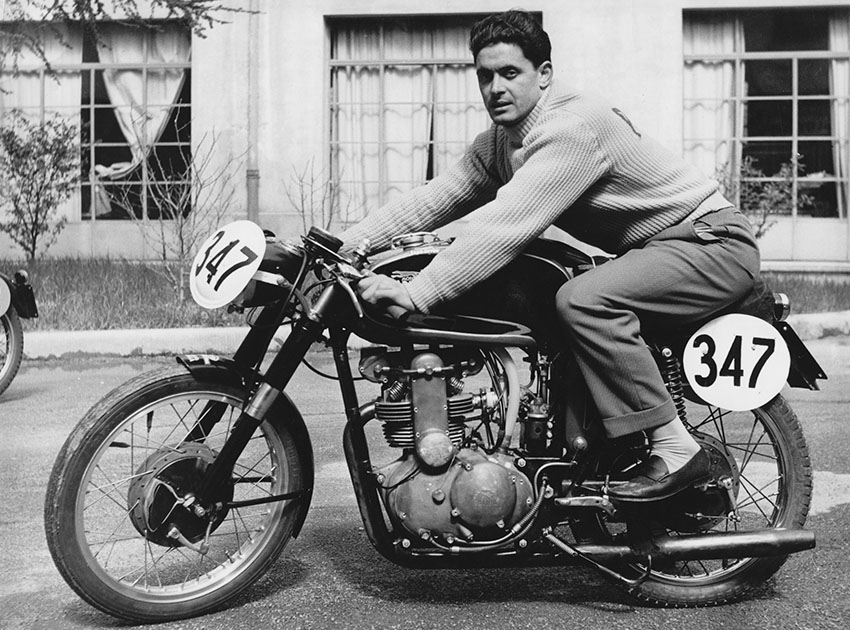
Giani on Twinshaft, 1956
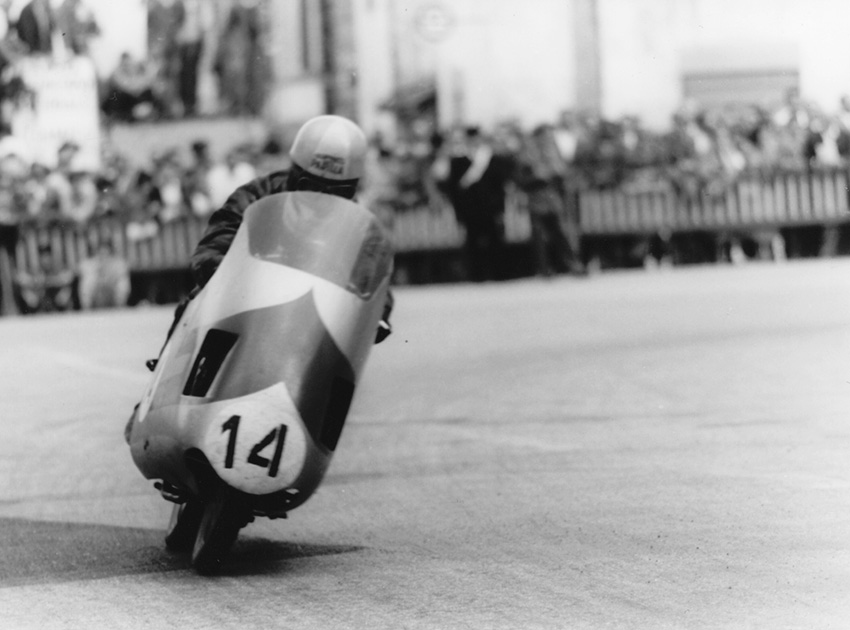
250cc Twinshaft, 1956
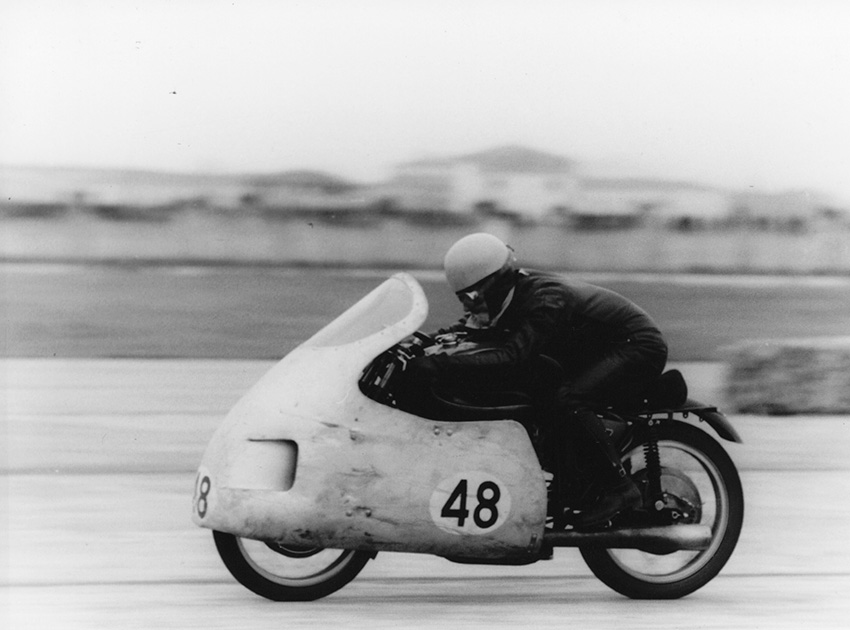
250cc Twinshaft 1956
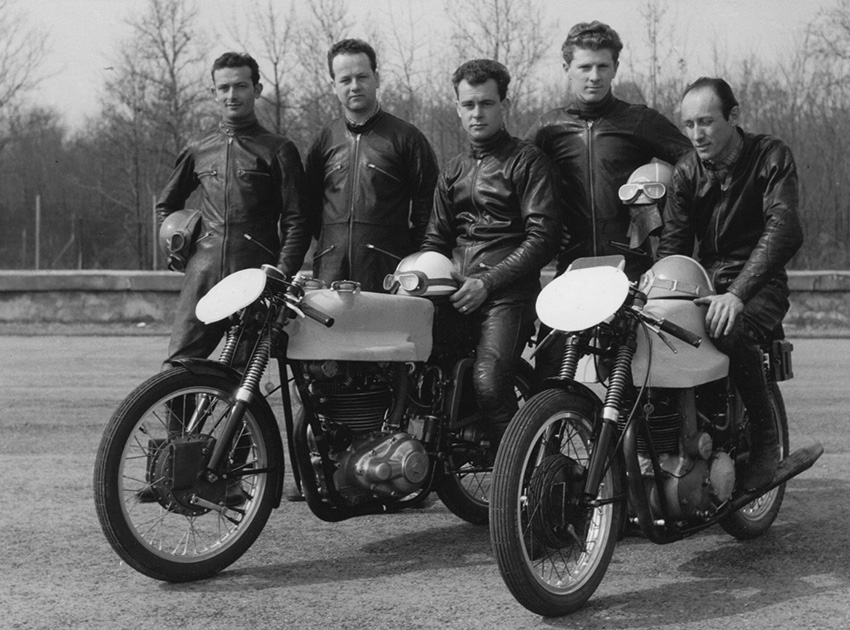
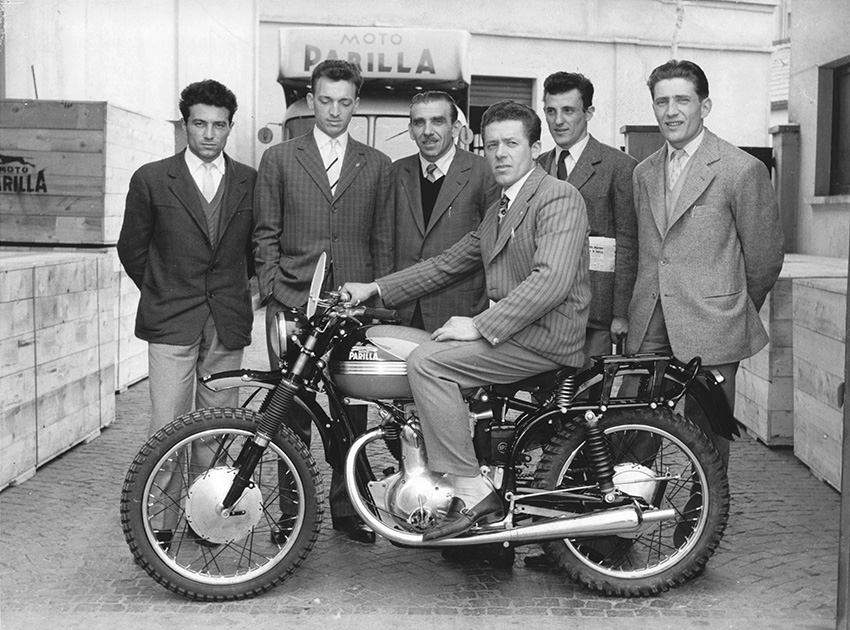
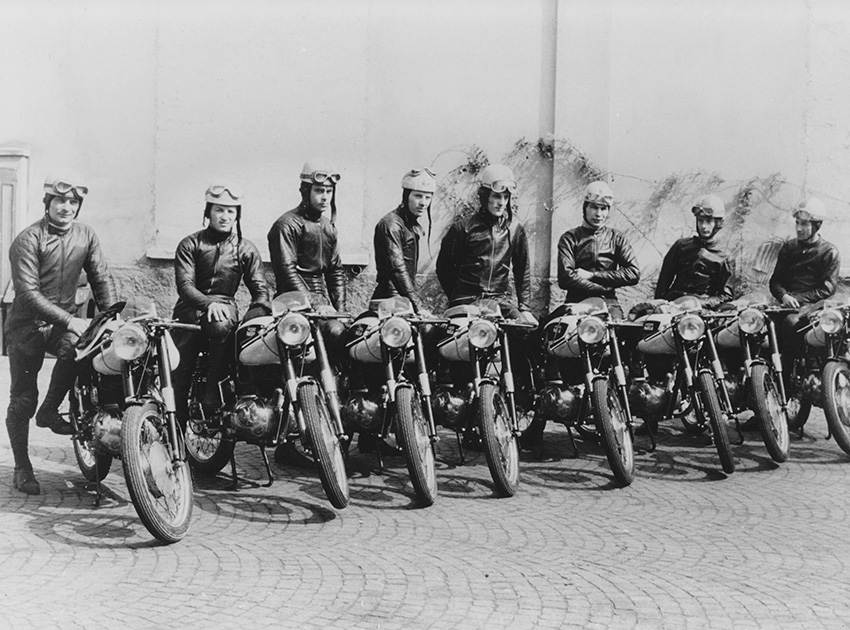
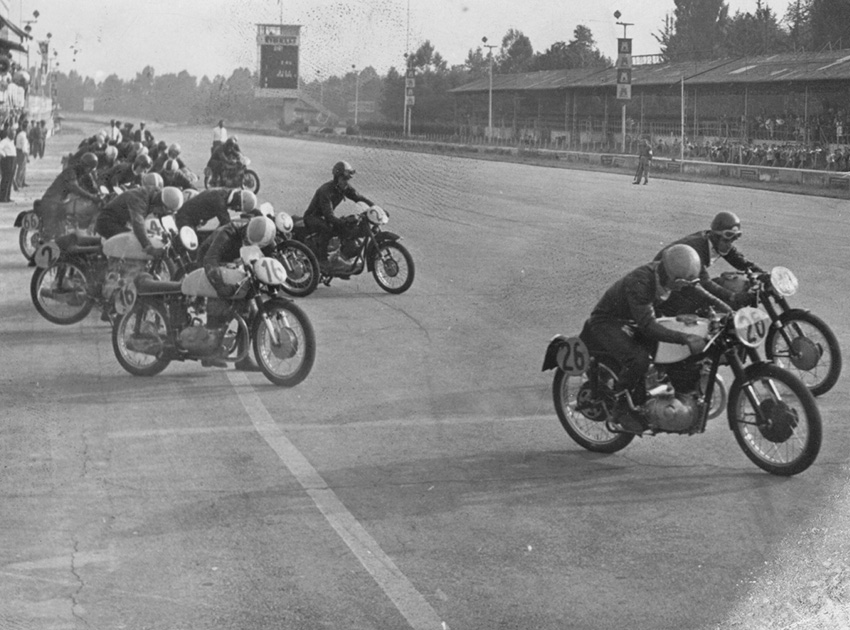
Official Team, Monza, 1956
TRAFFIC WARDENS
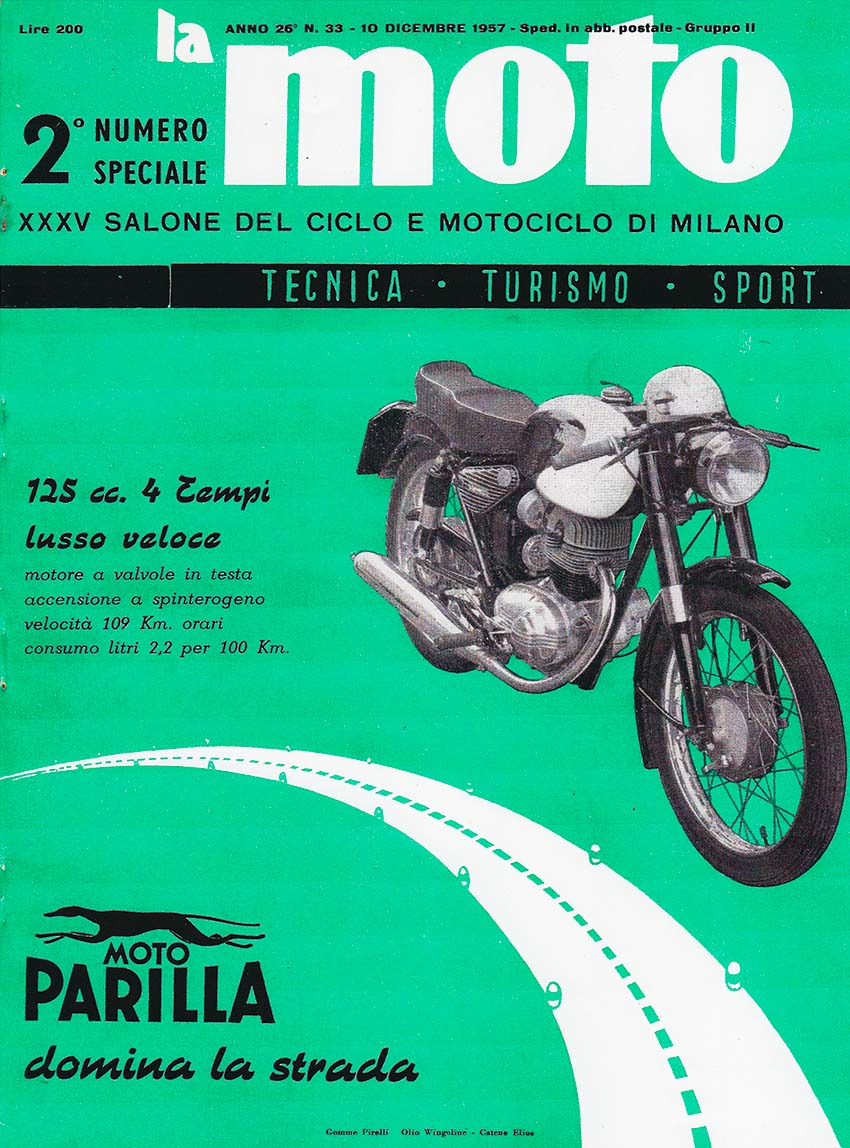
Keeping on the tradition of the motorcycles to the traffic wardens, the ones of LA SPEZIA choosed the 175cc. 4-stroke, but customized. Assembled on the basis of the "Lusso Veloce" (Fast Deluxe), with the tank of the "Touring 54" and the single seat.
SHORT NEWS
The export was going well, especially for the Parilla Company, mostly in the USA. Every five minutes one "Parillino" leaves the assembly lines.

1957 THE DESIRE TO BELIEVE
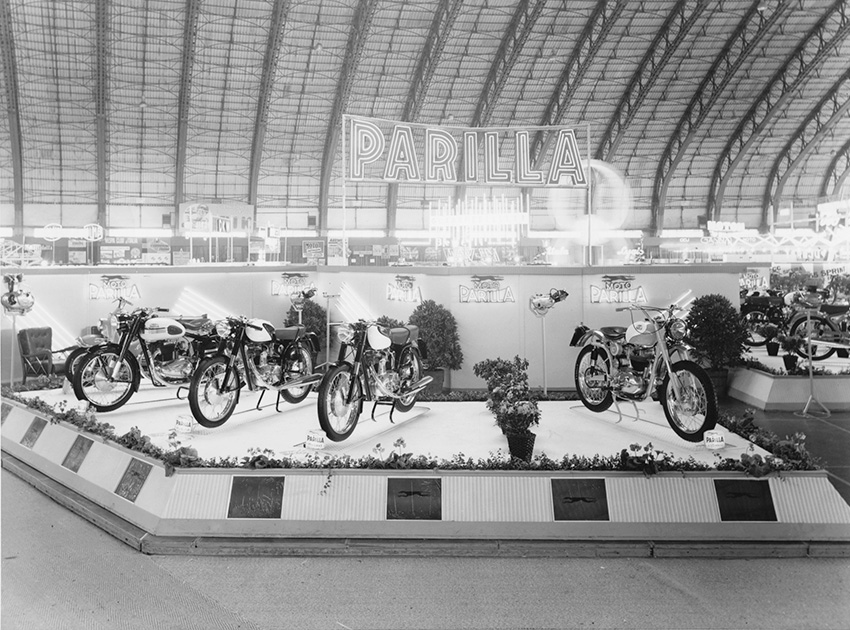
"A kind of motorcycle for any need". This is the new advertising slogan. This affirmation didn't seem as real as a few years before, due to the reduction of models' number, but, in spite of this, the Company was still first on this special ranking.
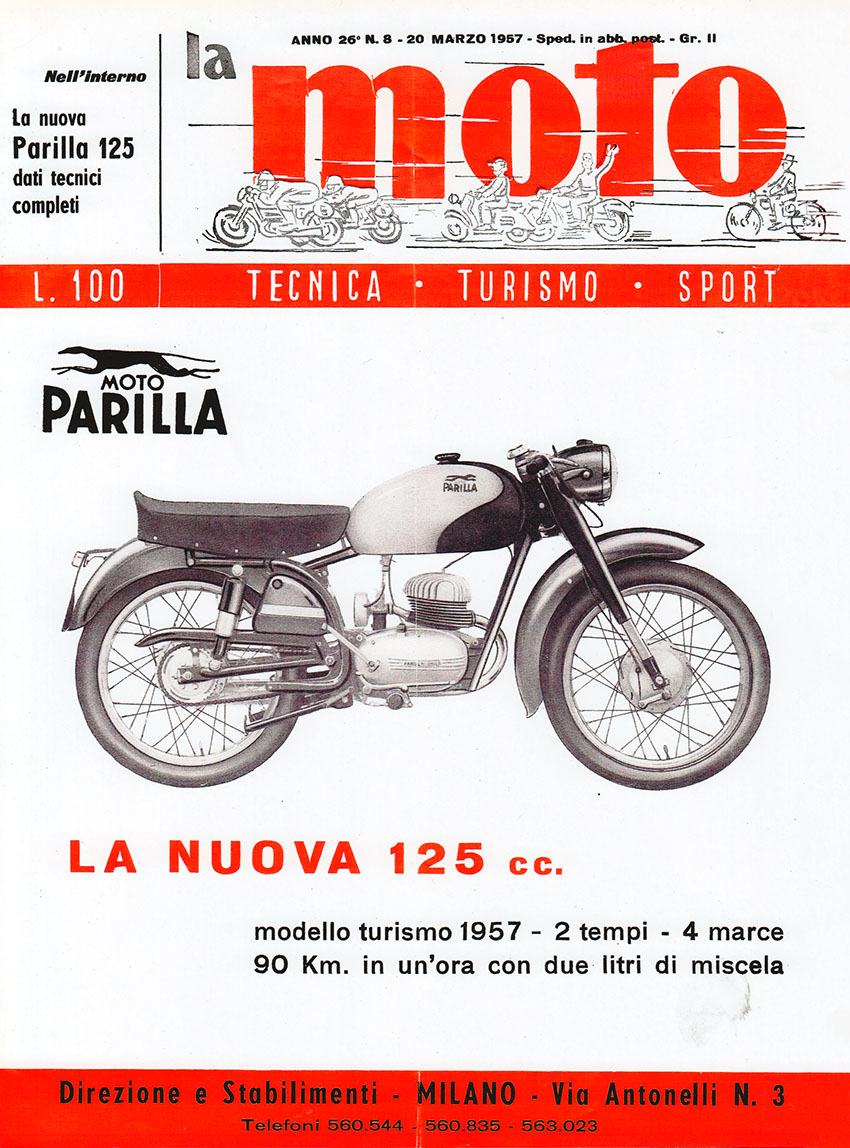
NEW 125cc TWO STROKE TOURING'57
This light motorcycle was fully redesigned in order to get the sales' performances as good as it was for the first one in 1951. The "short" frame was showing a similar trend of the 175cc. 4-stroke "Lusso Veloce (Fast Deluxe)", and the aesthetics got the most attention, with the replacement of any single part, from the tank to the brakes, from the front forks to the fenders, from the classic ivory color to the white one. Only the central crankcase was maintained, anyway modified. Very evident the modified thermal unit, the gear-box, and mostly the starting system, always in the right side, but to operate backwards instead of forwards. The retail price at Lit.149.000.
NEW 175cc FOUR STROKE MSDS (GRAND SPORT)
This motorbike wasn't really new, having entered some races in 1956, anyway must be considered real news because
the official presentation took place later. The frame was the one of the "Bassotto", with 19'' wheels, with aluminum rims,
Bonazzi telescopic hydraulic forks, Sturcher adjustable shock absorbers, the handlebars on two pieces, the knurled tube's footpegs
backward, the engine powered to HP 14,5 at rpm 8.000 able to push the motorbike at Km/h 135. On request it was available from
years before the gears distribution, instead of the chain distribution. The color was black and ivory. The retail price at Lit.350.000.
The motorbike's engine, which was the jewel of the Company, was tested one by one on the test bench, and selected according
to strict parameters. This engine, without muffler, with a Marelli 1001B spark plug and a SS25 Dell’Orto carburettor,
should exceed a minimum power of HP14,4 and should run (braked on the test bench) for a given period without any problem.
Most of those engines, which were assembled both with the gears or chain distribution, were showing a power of HP 14,9/15.
With a traction ratio of 14/47 the motorbike's real top speed was over Kh.140.
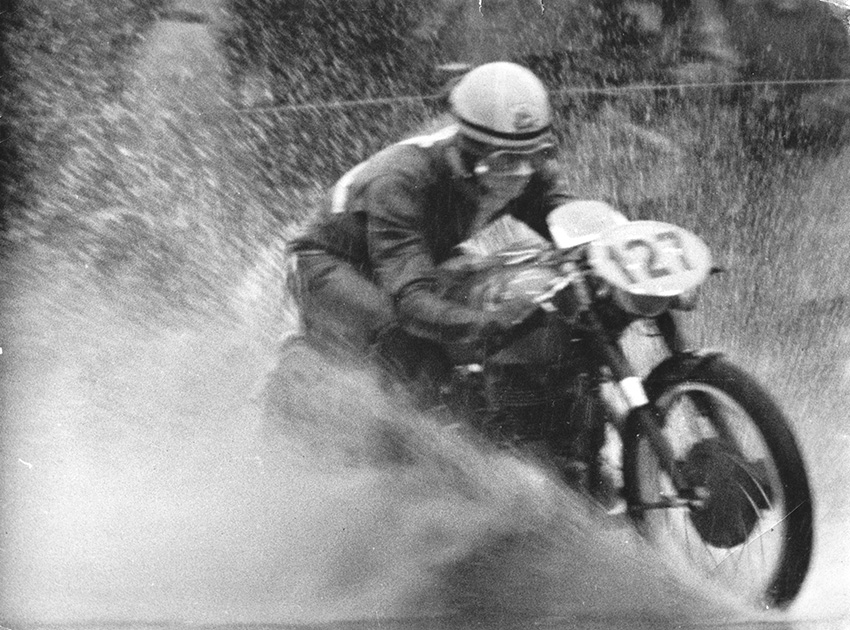
Brustia, V Motogiro d'Italia, 1957
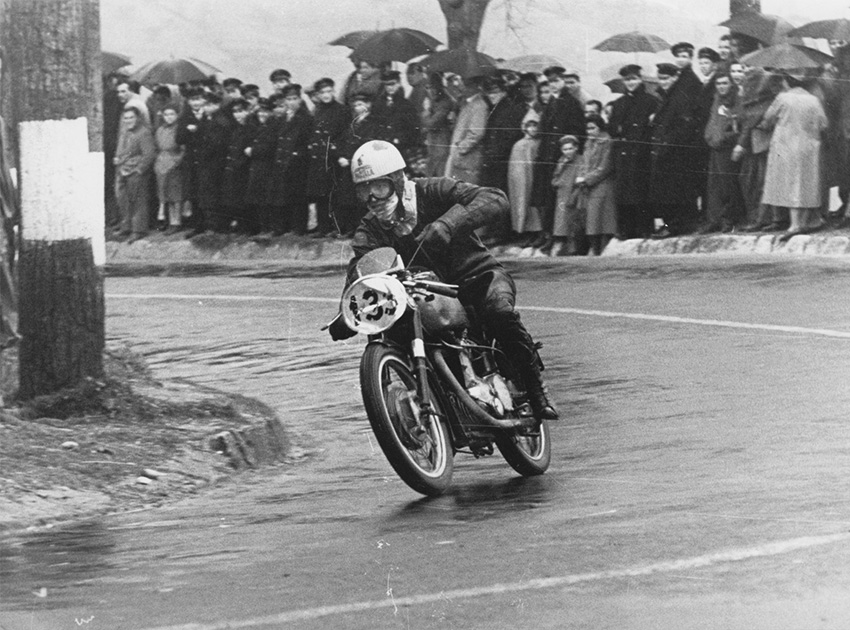
Caldari, V Motogiro d'Italia, 1957
THE SPORT
The Company assembled a special series of n.6 motorbikes to be driven by factory riders.
Those motorbikes were assembled with two batteries, two coils, double wiring, double tank cap, aluminum fenders,
magnesium brakes, special forks, close gear shift ratio, and gears distribution.
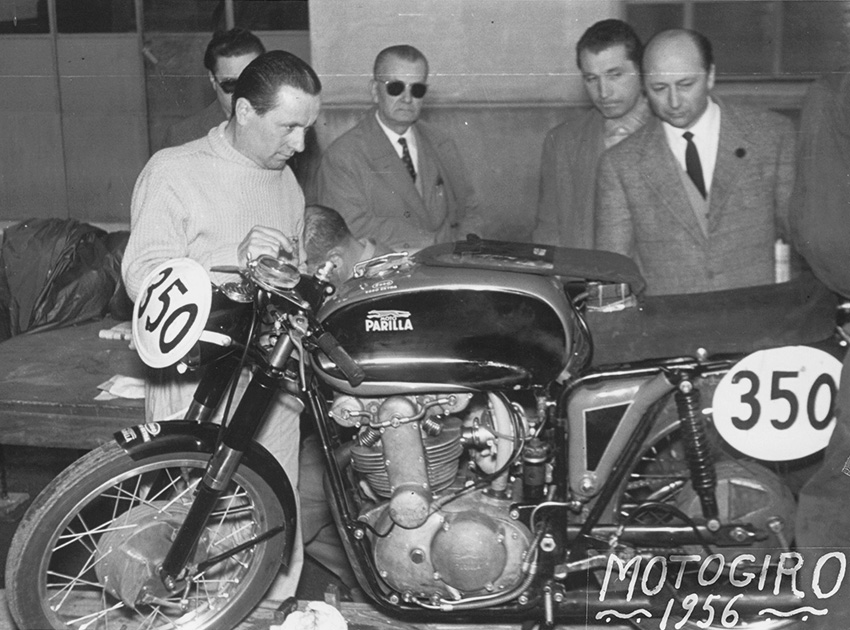
The race's finality of those six motorbikes was to run at the "MOTOGIRO" 1957, the most important road race,
which any motorcycles' company would like to win.
Any single stage,
also the longest and most difficult, was followed in person by Giovanni.
Things didn't go too well at the beginning, because
at the end of the second day of race, the best position of the first Parilla rider was only twelfth.
The motorbikes were performing, and the riders were in good shape. From the third day, the Parilla team started to go up in the ranking.
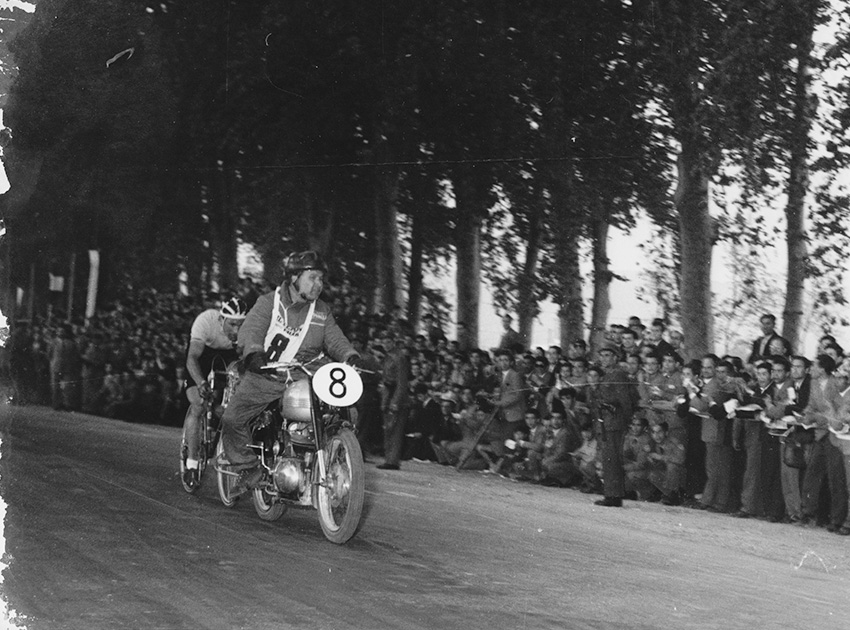
ROTTIGNI kept the leading position at three stages from the end.
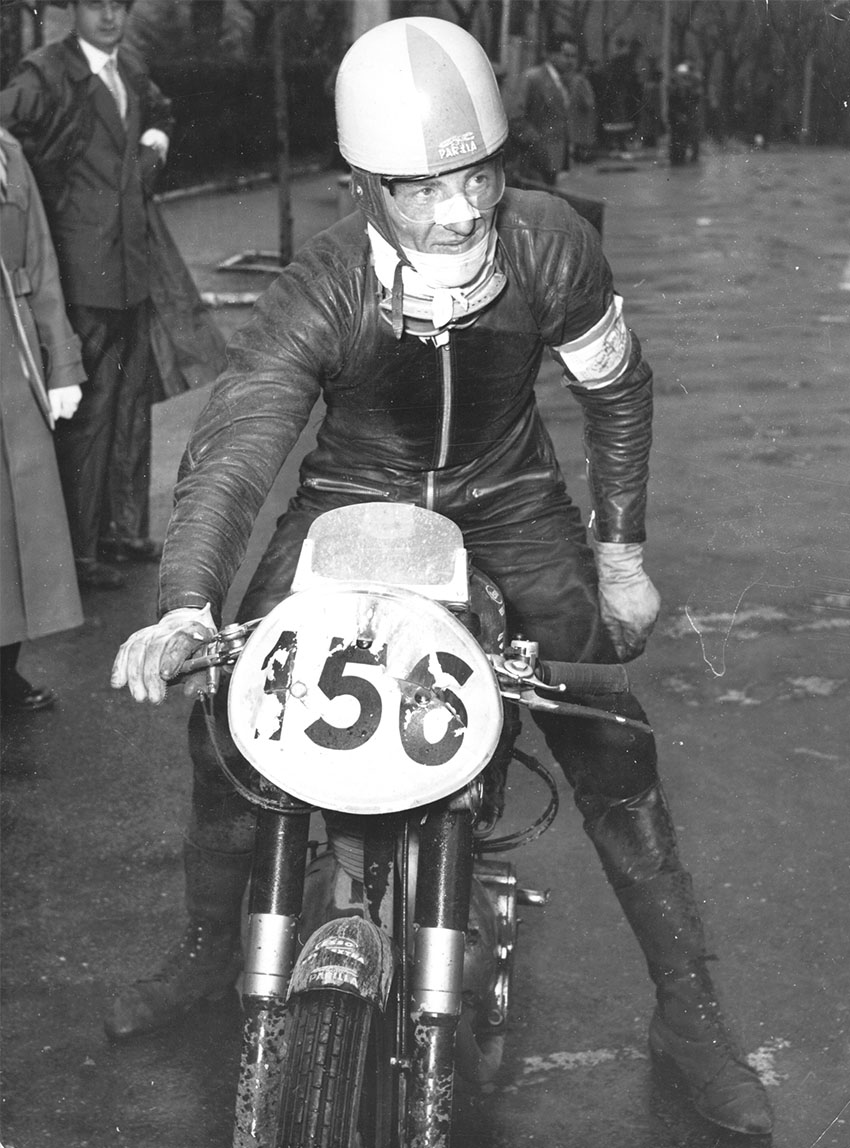
Rottigni, V Motogiro d'Italia, 1957
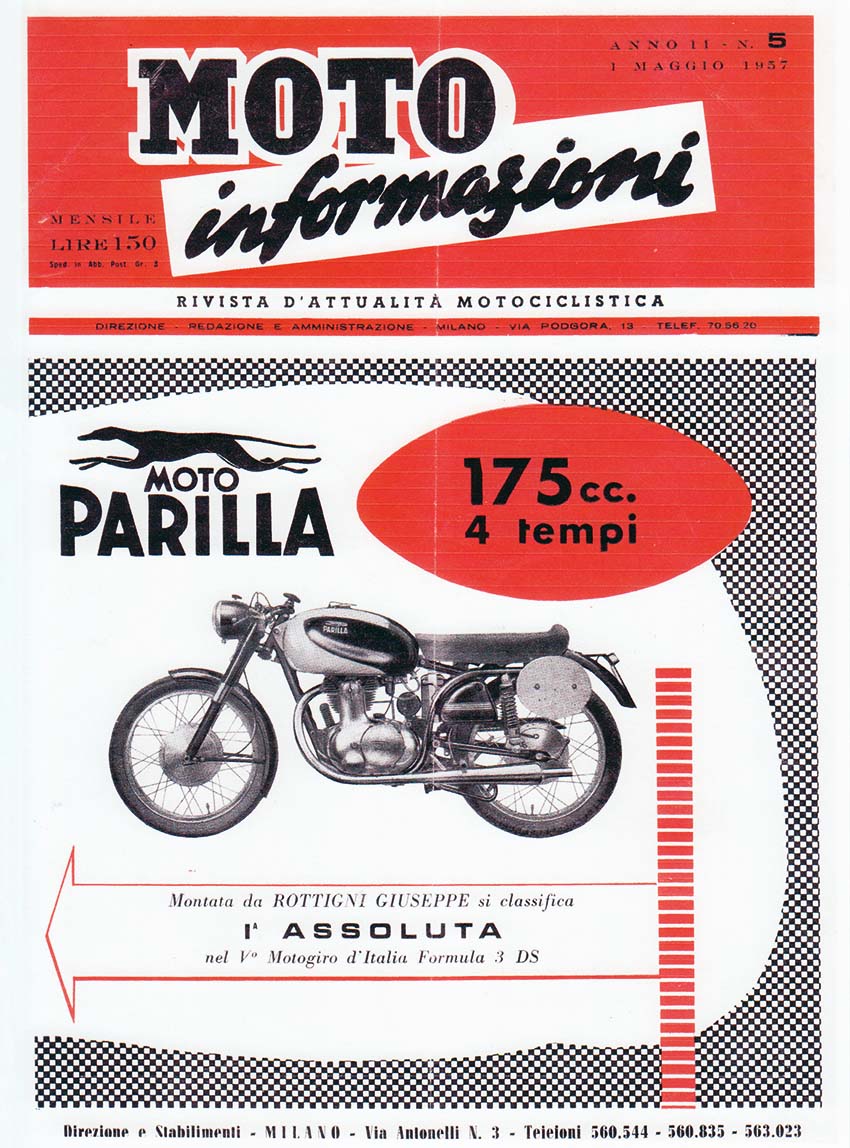
The rider Perfetti on Bianchi motorbike was in second position, 90 seconds back after 21 hours of racing. At the start of the last day, everyone had his heart in the throat. The rider Perfetti won, but the rider Rottigni kept the gap in two seconds. It was a triumph. After Km.2060 of the race, Rottigni, beating all the riders, brought his Parilla motorbike to victory in this unbelievable competition.
SHORT NEWS
At the end of the year there were n.51.362 registered Parilla motorcycles, besides the mopets.